
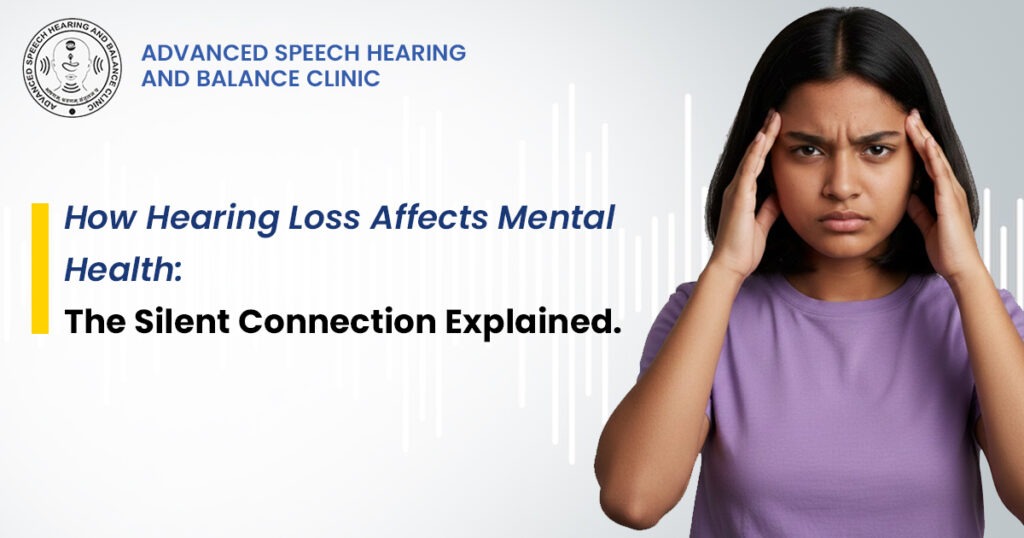
How Hearing Loss Impacts Mental Health – The Silent Link
Hearing problems often occur gradually and that’s why so many underestimate the impact. Beginning with just a couple of words during conversations can gradually affect your confidence, relationships and wellbeing. The connection to losing hearing, and mental wellbeing is more significant than many people realize, since constant communication difficulties could cause stress, anxiety, and social withdrawal. Disorders associated with hearing impairment as well as mental health tend to go unnoticed until they begin to affect daily living. If they are aware of them early and receive prompt support from trustworthy centers such as ASHBC and ASHBC, people are able to better comprehend the challenges and make meaningful progress towards more balanced hearing and a better emotional state.
If Hearing Loss Starts to Impact Daily Life
Hearing impairments can make daily circumstances feel like exhaustion. Conversations that are simple require additional effort and confusions occur more frequently. In time, some people be hesitant to attend social events telephone calls or other gatherings to alleviate their frustration. The withdrawal may cause feelings of solitude and loneliness and can have a profound impact on the mental state of a person.
Some patients say they start feeling misunderstood or ostracized, even within close relatives. It is possible for this emotional gap to increase, making hearing impairments or mental health problems more obvious.
The emotional effects of hearing loss that is not treated
Hearing loss that is not treated frequently causes anxiety and stress. Continuously trying to keep pace with conversation can be overwhelming. Many people are worried about responding improperly, not delivering important information, or appearing to be uninterested. The anxiety can reduce confidence and self-esteem.
Studies and experiences of patients show that depression is more likely in those who suffer from an untreated loss of hearing. A struggle to speak effectively can cause people to feel disengaged from their environment. That’s why dealing with the loss of hearing as well as mental well-being in conjunction is crucial and not treating hearing loss only as an issue with physical health.
What happens when hearing loss affects the mental and physical well-being of a person’s brain.
Hearing loss also puts additional stress upon the brain. The brain has to work more to process sound, it is less able to focus on mental focus, memory and control. In time, the physical fatigue could lead to anxiety, reduced concentration and mood swings.
Patients frequently report feeling emotionally exhausted at the end of their day, and especially following social activities. This constant stress is a clear indication of the strong connection between hearing loss and mental well-being and makes an early intervention vital.
breaking the cycle with the right support
It’s good to know the fact that treating hearing loss could greatly improve the mental health of people. Hearing tests and hearing aids, as well as counseling and therapy can assist people to reconnect to their surroundings and with families and friends. Hearing improvement often leads to new confidence as well as emotional peace.
The centers like ASHBC concentrate on the listening and psychological requirements of their patients. They provide individualized treatment as well as clear direction that help people to feel comfortable throughout their journey and not be feeling judged or pressured to attend.
The Function of Awareness and Family Support
Families play an essential part in helping someone who has hearing loss. Affectionate communication, patience and encouragement to seek out help helps ease the stress of emotional. If families are aware of the connection with the loss of hearing and mental well-being They are better able to provide effective assistance.
Early intervention and education can reduce the possibility of lasting emotional trauma and allow patients to feel less isolated with their experiences.
Making the first step towards better Hearing as well as Mental Health

If you or your family member is suffering from issues with hearing or mental changes, it’s crucial to consult a professional. In the absence of symptoms, anxiety and stress to build in silence.
By receiving compassionate and caring care from trusted clinics such as ASHBC Patients can tackle both hearing problems and their emotional wellbeing. The recognition of the link between the health of your hearing and your mental state can lead to improved interactions, better connections and a happier and fulfilled life.