
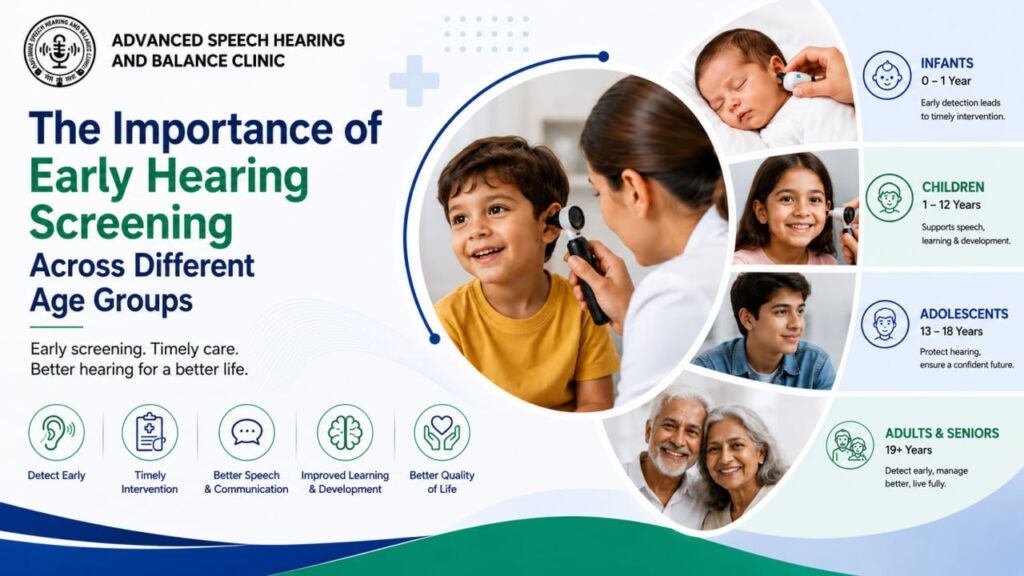
The Importance of Early Hearing Screening Across Different Age Groups
Hearing loss has this sneaky way of going unnoticed for way longer than it should, mostly because it rarely announces itself with obvious symptoms right away. It creeps in gradually, or in some cases, it’s present from birth and just doesn’t get caught until someone finally asks the right questions. That’s exactly why screening at every life stage matters so much, not just for one age group but across the board, from infants to elderly adults.
Why Screening Can’t Wait for Symptoms to Show Up
The problem with waiting for obvious signs is that by the time they appear, some damage or developmental delay may have already happened. Hearing plays a role in so much more than just, well, hearing. It shapes speech development, learning ability, social interaction, and even emotional well-being. Waiting until something seems clearly wrong often means missing the window where early intervention could have made the biggest difference.
The Importance of Early Hearing Screening for Children
Nowhere is this more critical than with infants and young kids. The first three years of life are when speech and language development happen at their fastest pace, and hearing plays a foundational role in that entire process. A baby who can’t hear properly misses out on the natural exposure to sound and language that shapes how they eventually learn to speak, read, and communicate.
This is exactly why newborn hearing screening has become standard practice in most hospitals now, catching potential issues within days of birth rather than waiting years for parents to notice something’s off. Beyond infancy, the Importance of Early Hearing Screening for Children continues well into school years too, since undiagnosed hearing loss often gets mistaken for attention problems, learning difficulties, or a child simply being shy in group settings. Regular screenings through toddlerhood and early schooling catch issues that might not have been obvious at birth but develop or become noticeable as a child grows.
Screening Matters for Teenagers Too, Just Differently
Adolescents face a different set of risk factors entirely. Constant headphone use, loud concerts, and general exposure to noisy environments through daily life quietly chip away at hearing over the years without teenagers even realising it. Screening at this age isn’t about catching birth-related issues anymore; it’s about identifying early noise-induced damage before it becomes permanent and building awareness around protective habits before poor choices turn into lasting consequences.
Why Adults Shouldn’t Assume Their Hearing Is Fine
Adults often skip hearing checkups entirely unless something feels obviously wrong, which is a mistake given how gradually hearing loss tends to progress. Years of workplace noise exposure, headphone habits, or even underlying health conditions like diabetes and cardiovascular issues can affect hearing long before someone notices they’re struggling. Routine screening during regular health checkups catches these subtle shifts early, when management options are far more effective than they would be after years of unaddressed decline.
The Elderly Population Faces the Highest Risk
Age-related hearing loss, known medically as presbycusis, affects a significant portion of older adults, yet it’s often dismissed as just a normal part of ageing that doesn’t need attention. This assumption causes real harm. Untreated hearing loss in elderly individuals has been linked to increased social isolation, higher rates of depression, and even accelerated cognitive decline in some studies. Regular screening allows for timely intervention, whether that means hearing aids or other supportive measures, that can genuinely improve quality of life and reduce these broader health risks.
Building a Habit, Not Just a One-Time Check
The bigger takeaway here is that hearing screening shouldn’t be treated as a single checkbox exercise done once and forgotten. It needs to happen at multiple points across a person’s life, adjusted to the specific risks and developmental needs of each age group. What matters for a newborn looks completely different from what matters for an old person, yet both deserve the same level of attention and consistency.
Where to Start
If you’ve been putting off a hearing evaluation for yourself or your child or simply aren’t sure when the last screening actually happened, there’s no better time than now to get it sorted. Advanced Speech and Hearing Clinic offers comprehensive hearing screenings tailored to every age group, from newborns to seniors, with the kind of thorough evaluation that catches issues early rather than after they’ve already affected daily life. The team at Advanced Speech and Hearing Clinic makes the entire process approachable, explaining results clearly and guiding families through next steps without any unnecessary complexity or confusion.